Tuesday, July 21, 2020

Finding hope in broken dreams.


I watched a video on Hope Works this week that touched me deeply.  In my service as a mission nurse, I often see missionaries, ward members, or friends whose lives do not go as planned or dreamed.  Life can seem broken and messy.  Liz Wiseman was featured on the video titled: Finding Hope in Broken Dreams.

Liz mentions some of these instances I mention here.   I observe people who want to be married or to have a marriage that lasts, a missionary who wants to serve only to have to end a mission early because of health issues, a person who wants a college education but can’t afford to go to school, a couple who wants to have children but remains childless, a couple who plans retirement and a mission but a spouse dies, and the list goes on. I am sure you know someone in your life, and maybe even you, who has had a dream dashed.  I know that I have experienced some of these dreams that have gone unfulfilled or have been broken.

Liz shared a story from her “messy” life.  One afternoon she sat in her room reading and soaking in the peace and quiet.  Her two sons, 12 and 7 were playing together and not fighting or yelling for once.  Suddenly she heard glass breaking.  Not the sound of a glass falling from a table to the kitchen floor but loud crashing/breaking like glass from a large window.

She ran down the stairs expecting to see severed limbs and blood everywhere to find her two sons standing in the living room in front of a curio cabinet.  All of the shelves except one and the contents of the cabinet were lying in a heap in broken bits on the floor.  The seven year old looked terrified and the twelve year old who usually was the trouble maker had a smug look on his face as he pointed to his little brother.

On top of the pile of china/glass was her husband’s cherished Lladro figurine broken into pieces.  Her husband had served his mission in Japan.  His brother has served in Spain where Lladro was made.  The brother had had a figurine made for her husband of a Japanese mother and her daughter in beautiful kimono robes.  The twelve year old was kneeling searching for all of the Lladro pieces and explaining to his mother that he could fix it so his father wouldn’t be sad.

Liz assured her seven year old that he was more important and valuable than any china cabinet and contents and while the younger boy went about cleaning up the mess, the mother and older boy sat at the table.  Mother tried to explain that it was impossible to put things back together but her son insisted that if he took super glue, he could fix it for his father.

Together they pieced and glued the figurine back together.  It actually went better than expected but a small piece of porcelain in the back of the figurine couldn’t be found.  They discussed things they might do to fix it but decided to leave it incomplete.

Liz called her husband to warn him of the disaster so he was prepared to lovingly thank his son for repairing the cherished item.  Even with all of the cracks and imperfections, the figurine became more dear and precious to them.

Liz goes on to explain that great beauty can come from broken things.  So how do we learn to appreciate all of cracks in our lives?  She enumerates three things we can do to find more joy amid the mess.  How we can find hope:

1. Eschew perfectionism.

Liz refers to a talk given by Jeffery R Holland in October 2017 titled Be Ye Therefore Perfect – Eventually in which he cautions to strive for steady improvement without obsessing over toxic perfectionism. I would invite you to read this talk.

2. Let our own cracks show. 

Sometimes when we post on FB or other social media, for example, we want our lives to appear to be models of perfection.   It doesn’t hurt for us to be vulnerable and to show the realities of life.  Asking for help fosters learning for everyone.  Admitting mistakes creates a climate for forgiveness.

3. Look to the right source for healing.
Psalms 147 says: “He healeth the broken in heart and bindeth up their wounds.”  True healing comes from our relationship with God.  It comes from our Savior Jesus Christ.  When we come in humility, weak things can become strong.  That which has been broken can be made whole.
Life is messy.  Things break.  We break.   The world offers self-help elixirs to heal our wounds.  Retail therapy is offered to help us live “the dream”.  But these are little more that cheap band aids that will inevitably bleed through.

Voices from the dark will tell us all is lost.

The Gospel teaches us that things can be fixed and healing is found in Jesus Christ.  Even if we’ve had a hope dashed, we don’t have to lose hope. We can find growth in failure.   We can find joy in the mess. And when we become truly broken hearted, this is when we find strength.  His strength.  A strength that truly endures.

Because there is no written script for the video, I have tried to quote or share the thoughts Liz presented.  I hope that you will watch this Hope Works video.  I know that it is through our Savior, Jesus Christ, that we can find peace, happiness, hope and strength to endure to the end.

I spent 5 days in the hospital with a missionary this week, went to urgent care twice, and spent quite a bit of time on the phone.  The life of a mission nurse and I LOVE it!


My view from the hospital room


I missed 4 days of walking on the beach so I got a little low on my vitamin sea.  There really are health benefits from going to the beach. According to an article from the University of New Hampshire, there are at least 5 benefits.  You may read about it here.

I just had to get a dose of the beach, so Sister Lucas joined me in a 5:00 A.M. walk on Friday morning so I could get to the hospital before the doctors made their rounds.  Sister Lucas was prepared with a flash light which we needed in order to see because it was so dark.

Friday morning pics of the beach.  

By the time we walked full length of the beach and back,
the sun was beginning to peek over the horizon.

Saturday morning we walked at our usual 7:00 A.M.  I was rather exhausted so I went grocery shopping on Saturday but really did nothing more than necessary.  I needed the rest.


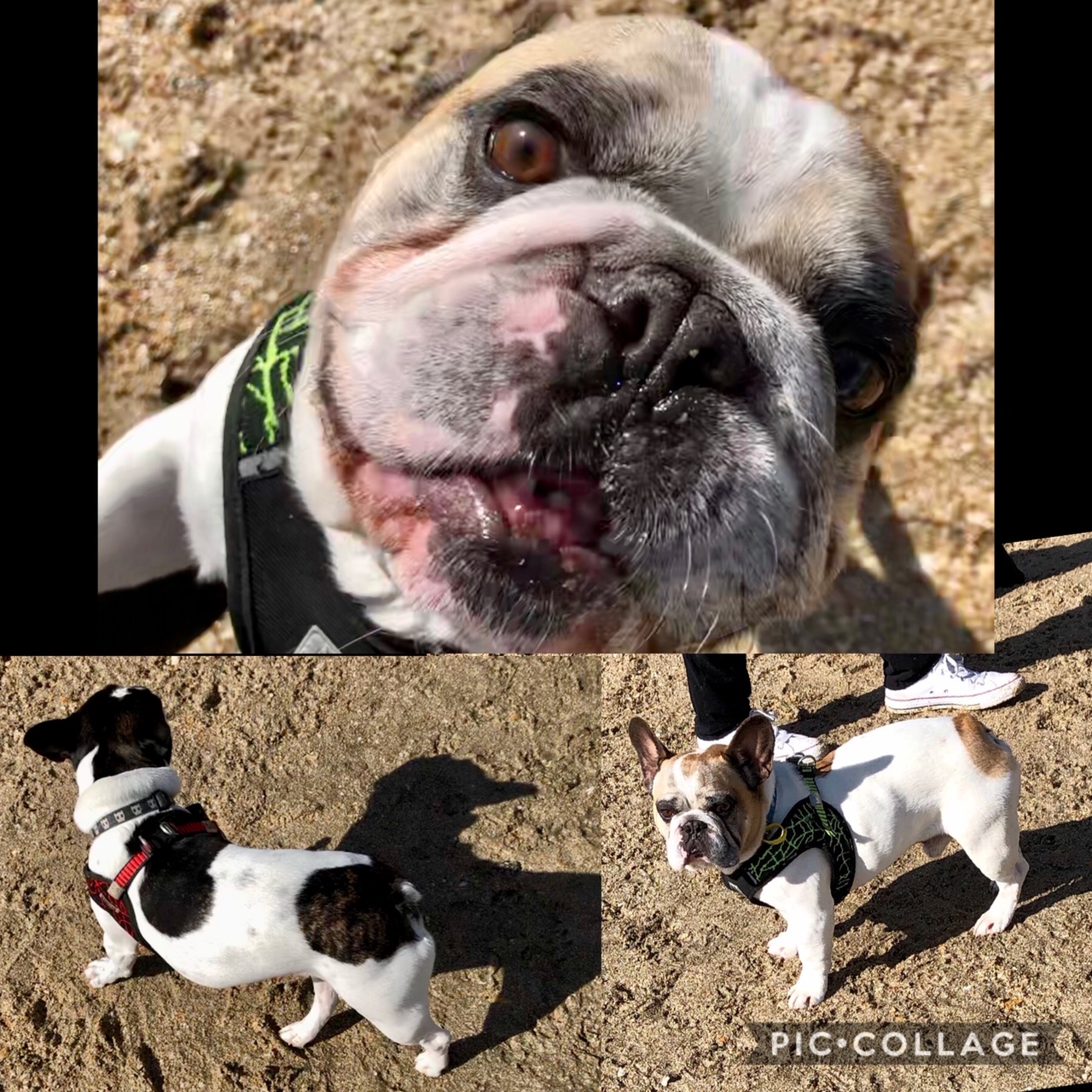
Sunday we walked after church.  There must have been a reunion or meeting of the French bulldog society.  I even got to hug a cute little dude.


From Wikipedia:  The French Bulldog is a breed of domestic dog. They are the result of a cross between Toy Bulldogs imported from England and local ratters in Paris, France, in the 1800s. French Bulldogs were bred to be companion dogs. They are stocky compact dogs with a friendly mild-mannered temperament.  
The breed is popular as a pet; in 2019, they were the second most popular registered dog in the United Kingdom, and in the U.S., the fourth-most popular AKC-registered dog breed. They were rated the third-most popular dog in Australia in 2017.
Monday I want to the office to go over some items that I needed to take care of.  We have four missionaries returning to Samoa so I needed to arrange COVID testing and medical exams that are required before they can board the flight home and enter the country.  I will meet them at the clinic Tuesday morning to complete the task.

I love serving in this mission.  I love the missionaries.

I love you my family and friends.

I love my Savior.

Another lovely gnarly tree.

Remember that I asked the missionaries to eat a healthy diet and that they should eat a rainbow of colors
to get the best nutrition.  Received these pics from a group of “health” conscious missionaries.


I wish I could bottle up or somehow share some of the benefits of the beach with you but all I can do is send another little video clip.  Close your eyes as you listen.   I hope you can feel the breeze on your face, smell the salt air, and hear the sound of the waves lulling you into peaceful rest.


Monday, July 13, 2020

Miracles do happen!


Because of the nature of my calling as mission nurse and my HIPAA training, I never share information about missionary health conditions. However, I have asked permission from a missionary to explain an injury in order to share a miracle with you.

One of the sisters injured her ankle when she tripped on a broken sidewalk. We went to urgent care where x-rays showed no fracture but a separation of the tibia and fibula at the ankle.

It was very painful. She was required to wear a large, cumbersome brace for a minimum of 2 weeks. She was to limit walking with no long periods of standing.

She is in a leadership position and the designated driver. She couldn’t drive with the boot and was not to remove the boot. This really curtailed the work she wanted and needed to do. She felt guilty because it also stopped her companion from doing their work.

They used technology and got rides from other sisters when possible but it was still a most trying and discouraging time for them.

She was to see the doctor 2 weeks from the date of the accident to determine how much longer she would be restricted and to see if alternate treatment was needed.

About 5 days prior to the scheduled follow-up appointment, I received the following message:
“Hi Sister Petersen, I have news for you! It is actually a miracle we'd love to share with you that just happened tonight. You remember that lesson we mentioned we had tonight at 6pm? So we ended up going to it and it is a Philipino family we've been teaching for a while now. They notice the spirit but they are struggling to find answers and we've taught them pretty much everything.  
So tonight, we decided to sit down with them and read the introduction of the Book of Mormon with them and ask the dad to pray. We read the Introduction and we were so shocked, even the RM we took tonight as fellowship was so shocked because the dad, who was the hardest to work with, he was just stating actual truths and principles of Christ from the Book of Mormon and Bible and the spirit was just so strong.  
When it came to the end of the lesson, we invited the dad to pray and ask specifically for confirmation of the message we've shared with them about the Book of Mormon. Just before he said the prayer, we invited everyone to kneel down. I invited them and I didn't know what I was thinking because I, can't even kneel because of my ankle. But as I knelt down, I felt no pain. And as the dad said his prayer in Tagalog, which we did not understand, we felt the spirit so strongly. After the lesson I was just standing outside the car with no crutches and just moving my ankle around and it doesn't even hurt anymore. I swear, with every possible position that might hurt, it doesn't at all. And that is a miracle we've just had and just wanted to share with you.  
We believe that our Heavenly Father healed me tonight because my companion and I needed NEEDED to kneel down in prayer with that family so they could receive a confirmation about the Book of Mormon. I am still in awe right now, I can hardly believe it but I know the Lord provide ways so we can accomplish His work and will. We love you so much and hope you enjoy your night and Sabbath tomorrow! ❤”
I felt the Spirit as I read this note. I know that the Lord blesses us in ways that we never expect. I’ve seen many miracles in my life. They are not always obvious at the time, as was the miracle that happened to this sister, but I see and feel the hand of the Lord in my life at all times.

I read an interesting article that I will share some parts:

Finding Miracles in Everyday Life
By Breanna Call Herbert, Alex Hugie, and Aspen Stander
Church Magazines
If we view life through a lens of faith in Jesus Christ, our eyes will be opened to the many miracles all around us. 
What Is a Miracle? 
We all know what a miracle is, right? Moses parting the Red Sea. The Savior giving sight to a blind man. A woman being cured from a terminal illness. One of the most extraordinary miracles is the Atonement of Jesus Christ—no miracle has ever been so far-reaching or powerful. But are those the only types of experiences that could be considered miracles? 
President Dallin H. Oaks, First Counselor in the First Presidency, said, “Many miracles happen every day in the work of our Church and in the lives of our members.”  But when was the last time you moved a mountain or saw a few fish and a few loaves of bread feed thousands? Most of us probably haven’t seen anything like that. So how can President Oaks’s statement be true? 
According to the Bible Dictionary, miracles are “manifestations of divine or spiritual power.”  With that definition, let’s open our eyes to the many miracles that surround us—miracles that we might not even recognize. 
We definitely see God’s hand in the lives of His people through the miracles in the scriptures. But we can also see His spiritual power when we receive an answer to a prayer, strengthen our testimonies, or have a change of heart. 
Still, there are other miracles that we tend to forget: The sun rises and sets each day; small seeds grow into mighty trees; the many components of our body work together, enabling us to breathe, run, dream, and eat. Inspired advances in medicine and technology are happening every day, and we can now communicate with almost anyone anywhere. God’s power can be seen in every detail of our lives. 
Why Does God Perform Miracles? 
Miracles come in many forms, but God performs them for the same overall purposes. Sometimes miracles heal, comfort, or physically protect God’s children, but these outward effects are not the only reason for miracles. Often, a miracle doesn’t prevent suffering or tragedy at all. God performs miracles for two basic reasons: to strengthen faith and to accomplish good. 
Often, miracles manifest God’s power to His children or teach a spiritual principle. The Bible Dictionary says that Jesus Christ’s many miracles “were intended to be a proof to the Jews that Jesus was the Christ” and to teach principles such as accountability, repentance, faith, and love. 
Other times, miracles can confirm a previous revelation, such as the signs of Christ’s birth in the Americas. God can also use miracles to advance His work—family history work, missionary work, and more. 
President Brigham Young (1801–77) taught, “Miracles … are not for the unbeliever; they are to console the Saints, and to strengthen and confirm the faith of those who love, fear, and serve God.”  Understanding why God performs miracles can help us recognize them in our own lives. 
How Can I Recognize a Miracle?
Miracles happen only according to the will of God and our faith in Him. 
The Lord performs both seemingly ordinary and extraordinary miracles in our day. Faithful followers of Jesus Christ in every dispensation have experienced dramatic healings and unexplainable successes. However, we should not overlook the everyday events that act as reminders of God’s hand in our lives. Sometimes we just have to recognize them!
Another very busy week has quickly come and gone! I have spent a night and a day (different admissions) in the ED, better known to you as the ER. I attended a doctor’s appointment and lots of phone/text/email time. Health Council meeting on Thursday. The work continues.

I have managed my daily beach walks in spite of business. It gives me my daily dose of “vitamin sea”.


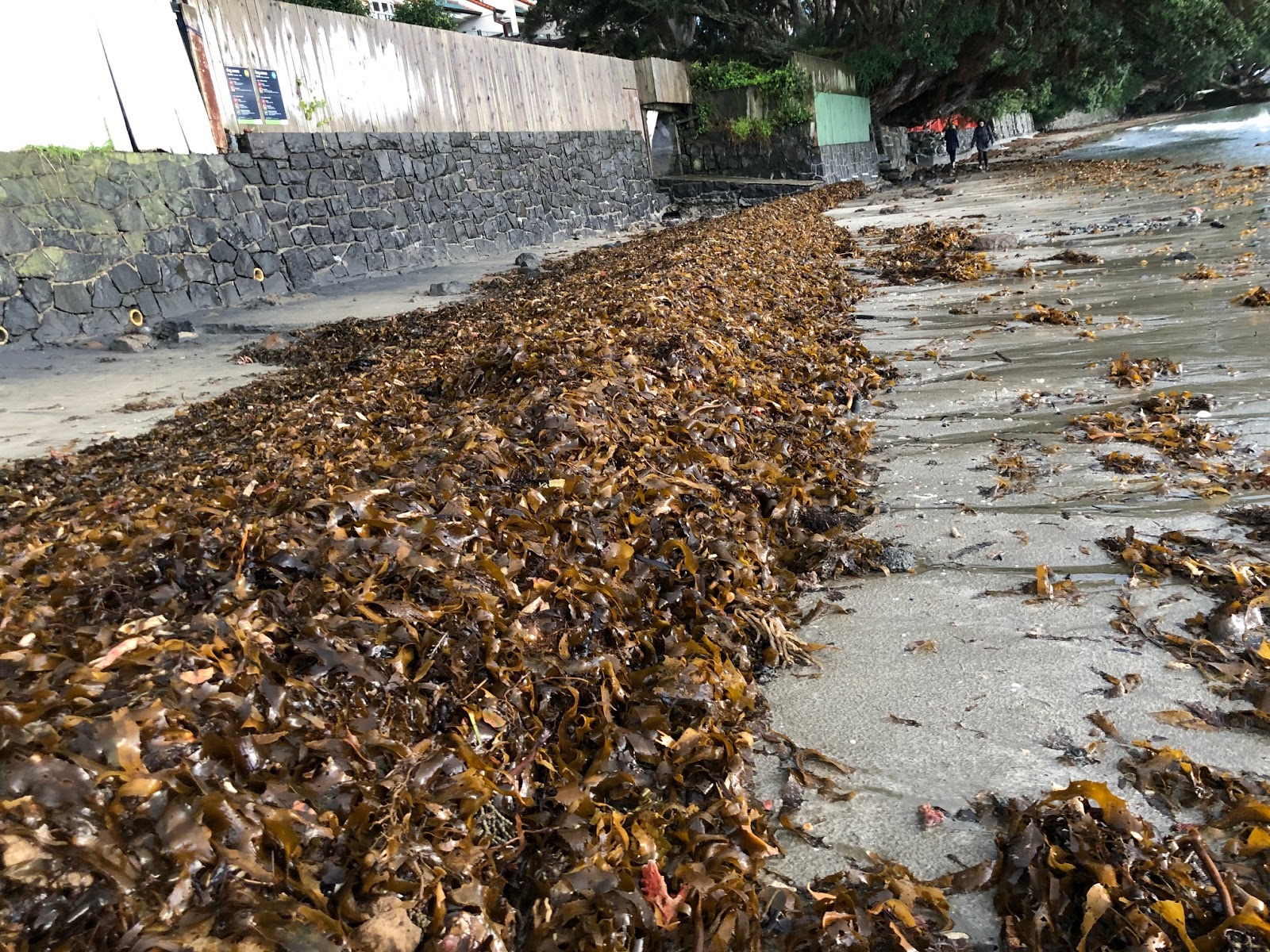
After a storm, the beach was piled high with seaweed. 

Friday morning it was clear and cold by New Zealand standards.
The sunrise was spectacular as always.

I posted the temp from the Weather Channel app.

The man wading into the water had on swim trunks only.
Most swimmers at this temp wear wet suits.

The apartment complex where I live had the planters replaced on the patios around the common area. It was fun watching the progress. It all happened in two days time.


Add caption


Doing laundry and my washer decided to do a number on me. It would get a few minutes
into the cycle and then gave an error code. The property manager was quick to respond
and I was only out of the laundry business one day.

I made chicken tacos one night. 

I was invited to dinner by Sister Lucas another night.She served snapper and a variety of roasted vegetables.

On my walk through the reserve, I spotted this beautiful pair of Pūkeko birds.


“PÅ«keko is the New Zealand name for the purple swamphen (Porphyrio porphyrio). There are many subspecies of purple swamphen. The subspecies found in New Zealand (Porphyrio porphyrio melanotus) is thought to have landed here around a thousand years ago from Australia. 
PÅ«keko are a member of the rail family of birds. They look very similar to takahÄ“, although takahÄ“ are much heavier. PÅ«keko are about 51 centimetres long with distinctive colourings; a deep blue colour, with a black head and upperparts, white feathers under their tail, and a red bill and legs. 
PÅ«keko are widespread and are as at home in pasture and farmland as they are in wetlands. They are commonly seen along marshy roadsides and low-lying open country. 
Unlike many other native birds, the pÅ«keko has adapted well to new habitats, such as grassed paddocks, croplands and even city parks, a necessity brought about by disappearing wetlands. However, the pÅ«keko is essentially a bird of swampy ground, lagoons, reeds, rushes and swamps.”
This picture came up in my memories on Facebook From 5 years ago just before my first mission to
New York City.  I remember how excited I was to become a missionary. The excitement hasn’t waned!!

I pray that you will have a safe, healthy, and happy week. Look for the miracles daily in your life.

I love my Savior. I love my family and friends.

Tuesday, July 7, 2020

Why I became a nurse and a missionary.

President and Sister Parr

I’ve have missionaries and others frequently ask me two questions:  what made you decide to become a nurse? and what made you decide to come on a mission?

After I graduated high school and was preparing to leave home for college, my father called me aside to give me some advice.  I had always wanted to be an attorney.  He recommended to me that I choose a more “secure” type of profession such as a school teacher or nurse.  He told me that I may have difficulty finding a dependable job as an attorney but that there would always be a need for teachers or nurses.  Since I liked the science classes I had taken in school, I leaned toward nursing.  I have never regretted that decision and I’m grateful for my father’s wisdom.

During my career as a nurse, I have worked in a hospital, a clinic, and a rehabilitation hospital.  I have been a “mother” nurse, a “neighbor” nurse, and now a “mission” nurse.  Giving care and support to patients, friends and family has always brought me great joy and satisfaction.  It has defined me.

My husband, Kay, and I had always planned to serve a mission together.  Kay loved serving his mission as a young man in Uruguay and he wanted me to have the experience and joy that he found as he served in South America.  We looked forward to serving together.  The Lord’s timing for Kay was not to serve another earthly mission although I feel and believe that he is serving a mission where he is now.  After his death, I felt that there was no reason for me not to serve a mission. 

I wrestled with leaving my family but Kay used to always say to me:  “If you want to be of service, you have to be willing to sacrifice.”  Those words kept coming to me.  In serving my mission, I don’t feel that I sacrifice although I do miss the time with my family at home.  The blessings of mission service far outweigh any sacrifice I make.

What a blessing it is for me to have this opportunity to serve.  Sometimes it is difficult to put feelings into words and as I continued to contemplate this question of why I came on my mission further, I thought of a BYU speech I read a few years ago.  It took me a minute to find it, but Sondra Heaston, an Associate Teaching Professor in the BYU College of Nursing, gave a speech titled: Keeping Your Fingers on the PULSE of Service that said it very well.
“The heart is a vital organ necessary to maintain life. The heart rate, also known as the pulse rate, is the number of times your heart beats per minute. In order for your body to function properly, it is important to have a continuous, regular, and strong pulse. With certain variations in the pulse, you may become sick and unable to function. Elder Marvin J. Ashton, in a general conference talk from October 1988, taught that the Lord measures an individual’s heart as an indicator of that person’s capacity and potential to bless others. In his words: 
Why the heart? Because the heart is a synonym for one’s entire makeup. We often use phrases about the heart to describe the total person. Thus, we describe people as being “big-hearted” or “goodhearted” or having a “heart of gold.” Or we speak of people with faint hearts, wise hearts, pure hearts, willing hearts, deceitful hearts, conniving hearts, courageous hearts, cold hearts, hearts of stone, or selfish hearts. 
The measure of our hearts is the measure of our total performance. As used by the Lord, the “heart” of a person describes his effort to better self, or others, or the conditions he confronts. [“The Measure of Our Hearts,” Ensign, November 1988, 15] 
I recently saw a Facebook post from a wonderful friend who is a nursing student in Indiana. She had posted a video that had been presented by Dr. Toby Cosgrove, CEO of the Cleveland Clinic, for his 2012 state-of-the-clinic address. The video really touched my heart and helped me to evaluate how I truly see and value others. I would like to share that video with you in the hope that it will do for you what it did for me and will start you thinking about the state of your heart. [A video was shown: Empathy: The Human Connection to Patient Care
What if we could really see into each other’s hearts? Would we understand each other better? By feeling what others feel, seeing what others see, and hearing what others hear, would we make, and take, the time to serve others, and would we treat them differently? Would we treat them with more patience, more kindness, and more tolerance? 
A quote from Henry David Thoreau suggests that trying to see into each other’s hearts could truly be something that could benefit our heart health: “Could a greater miracle take place than for us to look through each other’s eyes for an instant?” (Walden [1854], I, “Economy”). 
While we may all look at things differently, our hearts beat with many of the same dreams.” 
Sister Heaston goes on to say: 
“Doctrine and Covenants 4:2, states: Therefore, O ye that embark in the service of God, see that ye serve him with all your heart, might, mind and strength, that ye may stand blameless before God at the last day. 
This scripture teaches us that in order to stand blameless before God at the last day, not only should we serve Him with our might, mind, and strength, but it is also imperative that we serve Him with our heart. Our Heavenly Father and the Savior know our heart. Service with all of our heart must then be motivated by the pure love of Christ, free from all selfishness. 
Just as there is a necessity for each of us to know that our physical heart is functioning properly, it is equally important to know that our spiritual heart is healthy and functioning properly. Unfortunately, there is not a two-finger technique that I can teach you that will effectively assess and monitor your spiritual heart rate. But there are indicators from our daily life that help us to know where we stand spiritually. One of the most easily measurable of these indicators is our ability to help meet the physical and spiritual needs of others—or, in other words, our ability to be of service to those around us. And that is the topic I would like to address with you today.
I would like to suggest to you an acronym that will help you to assess, monitor, and improve your spiritual heart health. That acronym is PULSE, which is defined as follows:
P = Pray: Pray to have a serving heart.
U = Understand: Understand and recognize the needs of others.
L = Lose: Lose yourself in the service of others.
S = Spirit: Be Spirit driven—listen to and follow the promptings of the Spirit.
E = Emulate: Emulate the Savior.”
Sister Heaston goes on to explore each of these in greater detail.  It is a wonderful talk and I would invite you to read, or better yet, watch it in its entirety.

I would encourage you also to watch the video in the talk: Empathy: The Human Connection to Patient Care.

I can testify that serving others does in deed bring joy, love, and the Savior into my life.

The cold and flu season has hit the southern hemisphere.   As I mentioned last week, I continue to have calls every day and have gone to urgent care 3 times this week with missionaries to get treatment for strep throat, coughs, etc.  One day I was able to help a couple of sisters who needed a ride to a conference because the driver in the companionship had an injured ankle.  Two other days I went to doctor’s appointments.  It has been a busy but rewarding week.  I have few pictures to show but the love I feel from the missionaries can’t be captured in a picture.

Tuesday I drove to Whangarei to take some medication to a missionary.  While there it was suggested that I go to a Philippine restaurant.  It was a good suggestion.  I had pork adobo.  It was delicious.


I was told that adobo is the national dish of the Philippines.  I wanted to know more about the food and this is what I learned:
“Adobo, a popular dish in Philippine cuisine. You may use chicken, pork, seafood, or vegetables marinated in vinegar, soy sauce, and garlic and slowly simmered until yummy! Many Filipinos consider adobo, the national dish of the Philippines. The perfect adobo lies in the delicate balance of soy sauce, vinegar, garlic and spices (bay leaves and fresh ground peppercorns).  Others use salt or patis (fish sauce) to enhance flavors. Recipes vary from different regions in the Philippines.  The best way to start the preparation of adobo is to marinate all ingredients for at least an hour or the longer, the better.  This is followed by gently stewing the mixture until the meat is tender, and the marinade is reduced to a small amount of gravy.”
I also enjoyed Pan de ube - aka - ube bread, the super yummy Filipino bread with a sweet yam filling.


We got a new mission president and companion this week.  On Saturday evening, the senior couples in our mission had dinner at Bushman’s Grill with President and Sister Parr where we celebrated the 4th of July and got acquainted with our new leaders.   Sad to say goodbye to President and Sister Walker who went home to Hawaii, but welcome to President and Sister Parr.


The beach has been awesome this week.   I love the “moodiness” of the beach:  all sunshine one day and wind and rain the next.

Tuesday morning

After a stormy night, we often see little jelly fish on the beach.
This is a HUGE jelly fish with my foot for comparison of size

Someone is going fishing. Two ski-dos decked out for the day.


Wednesday sunrise


Saturday morning boat races


 And the race begins

Sunday afternoon there was a stiff wind.

Kite day!!

When we arrived at the beach on Monday morning, it was high tide.  In all of the time I have been walking the beach, I have never seen the tide this high.  We usually enter the beach at the north end by the boat ramp.  Today the water was so high that we had to walk a few blocks south along the streets to enter the beach and it was still difficult to find a dry path to walk on and to stay out of the waves.

This picture shows the water clear up to the stone wall. Normally I would
have tons of room to walk along between the wall and the sea.


I misjudged how quickly the wave would hit before I could get to high ground.  Wet Feet!!!

South end of the beach with water up to the stone wall on this end too.

Huge log carried a shore

It is July but also the time when poinsettias bloom.  At least they are blooming in my neighbor’s garden.


Tuesday morning on my walk home from the beach, the sun was shining after a rain.  The sun caught this rose in such a way that it doesn’t look real but I did not alter the color in the picture.  I like the raindrops on the petals.


It is my prayer that you will all be healthy and safe and find joy in serving others.

I love my Savior.  I love you my family and friends.